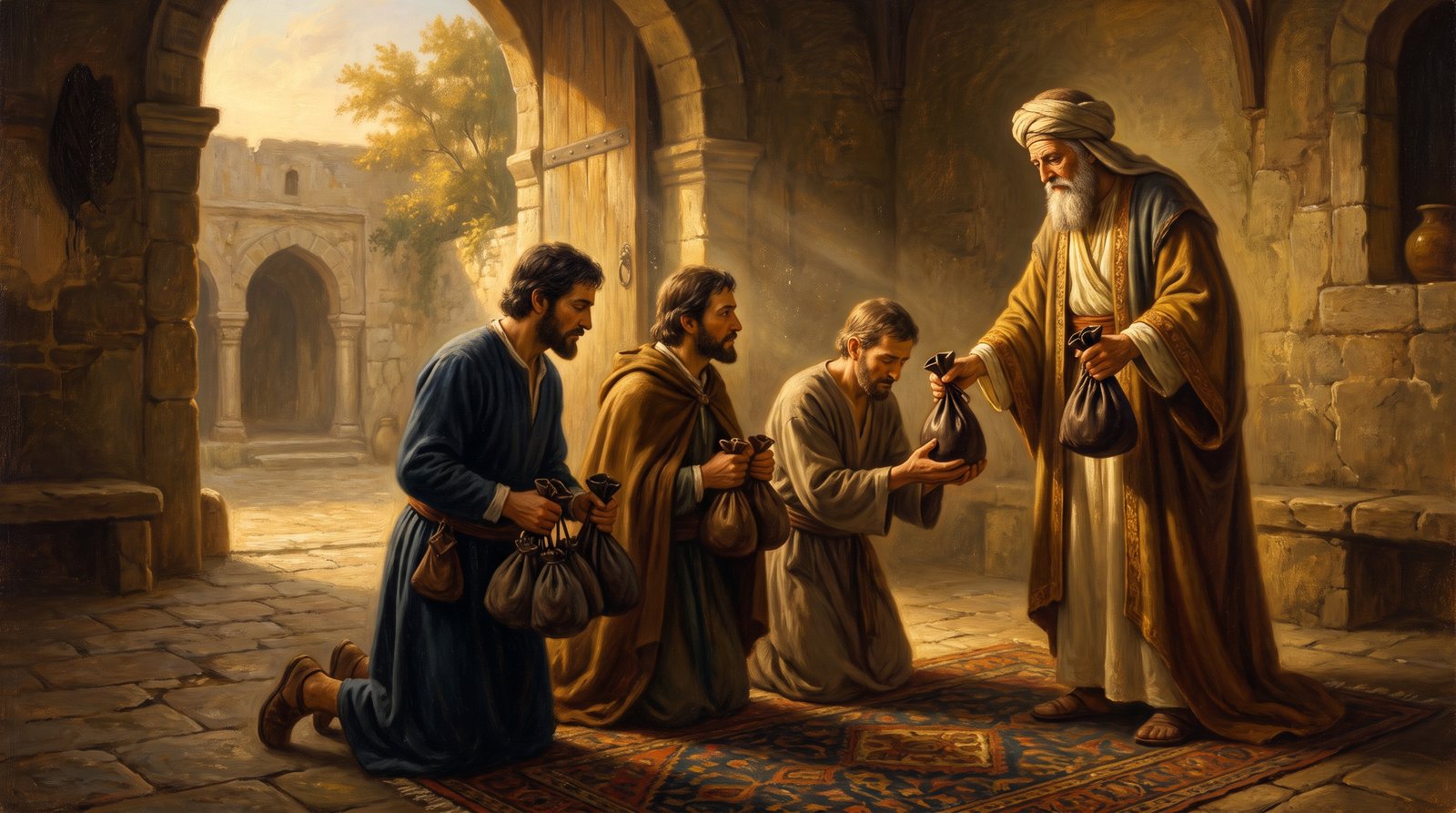
Our practice's name, Matt25 Capital, comes from Matthew 25. In that chapter, Jesus tells the parable of the talents. It is one of the clearest pictures of stewardship in Scripture, and it has a lot to say to anyone getting ready for retirement.
A man going on a journey entrusts his property to three servants. He gives one five talents, another two, and another one, "each according to his ability." A talent was a large sum, many years of wages.
The first two servants put the money to work and double it. The third digs a hole and buries his talent. When the master returns, he praises the first two: "Well done, good and faithful servant." He rebukes the third, who says, "I was afraid."
The servants manage someone else's money. That is the starting point of Christian stewardship: what we have is entrusted to us. That idea changes how we think about retirement savings. They are not just "my money." They are resources to manage for God's purposes, including providing for family and giving to others.
The servants received different amounts, and the master praised the two-talent servant with the same words as the five-talent servant. Your retirement plan does not need to look like anyone else's. Faithfulness is measured by what you do with what you have, not by the size of the account.
That is a helpful word for anyone who feels behind, or who compares their savings with friends.
The third servant's mistake was not losing money. He did not lose any. His mistake was acting out of fear. "I was afraid, and went and hid your talent in the ground."
Retirement brings real fears: running out of money, a market crash, health costs. Those fears are understandable. But decisions driven only by fear can lead to problems too, such as keeping everything in cash while inflation erodes it, or freezing and making no plan at all.
The goal is not to ignore risk. It is to face it with a plan, rather than bury it.
The parable is not a call to take wild risks. The faithful servants "put the money to work." In financial terms, that means using resources thoughtfully, with a purpose.
For retirees, that often means balance:
No investment approach removes risk, and past results do not predict future ones. But a clear plan can help you act with confidence instead of fear.
Right after the talents comes the scene of the sheep and the goats (Matthew 25:31-46). Jesus says that whatever we did for "the least of these," we did for him: feeding the hungry, welcoming the stranger, visiting the sick and imprisoned.
Put the two passages side by side and a picture of stewardship forms. We are trusted with resources (the talents), and a major purpose of those resources is caring for others (the least of these). That is why we believe giving belongs inside a retirement plan, not outside it.
Here are practical ways to apply Matthew 25 as you approach retirement:
Many business owners see their company as their largest "talent." Planning for succession, whether selling, passing it to family, or winding down, is a stewardship decision too. It affects employees, family and your own retirement income.
The heart of the parable is not the return. It is the relationship: a master who entrusts, and servants who respond faithfully. Thoughtful retirement planning is one way to respond faithfully with what you have been given.
Will Snodgrass, CFP®, built Matt25 Capital around this parable. He works with Christian pre-retirees, retirees and business owners from our office in The Woodlands, Texas, and by video across Texas. Advisory services are available only where Will is properly registered or exempt from registration. Take the Free Retirement Paycheck Readiness Scorecard at scorecard.matt25capital.com, or visit Christian Financial Advisor in The Woodlands.
Related reading: Is It Biblical to Save for Retirement? | From Fear to Faith in Retirement | Christian Legacy Planning Framework
It is about stewardship: faithfully managing what God entrusts to us, rather than hiding it out of fear.
A talent was a large weight of silver or gold, equal to many years of a laborer's wages.
It does not endorse reckless risk. It warns against fear-driven inaction and encourages thoughtful, purposeful use of resources.
Later in the chapter, Jesus says serving "the least of these" is serving him, which connects stewardship with caring for others.
Our name comes from Matthew 25 and its picture of faithful stewardship.
This material is for education only and is not tax or legal advice. Consult your tax or legal professional about your situation. Education only. Investing involves risk, including loss of principal. Securities and advisory services offered through Commonwealth Financial Network®, Member FINRA/SIPC, a Registered Investment Adviser. Fixed insurance products and services are separate from and not offered through Commonwealth.