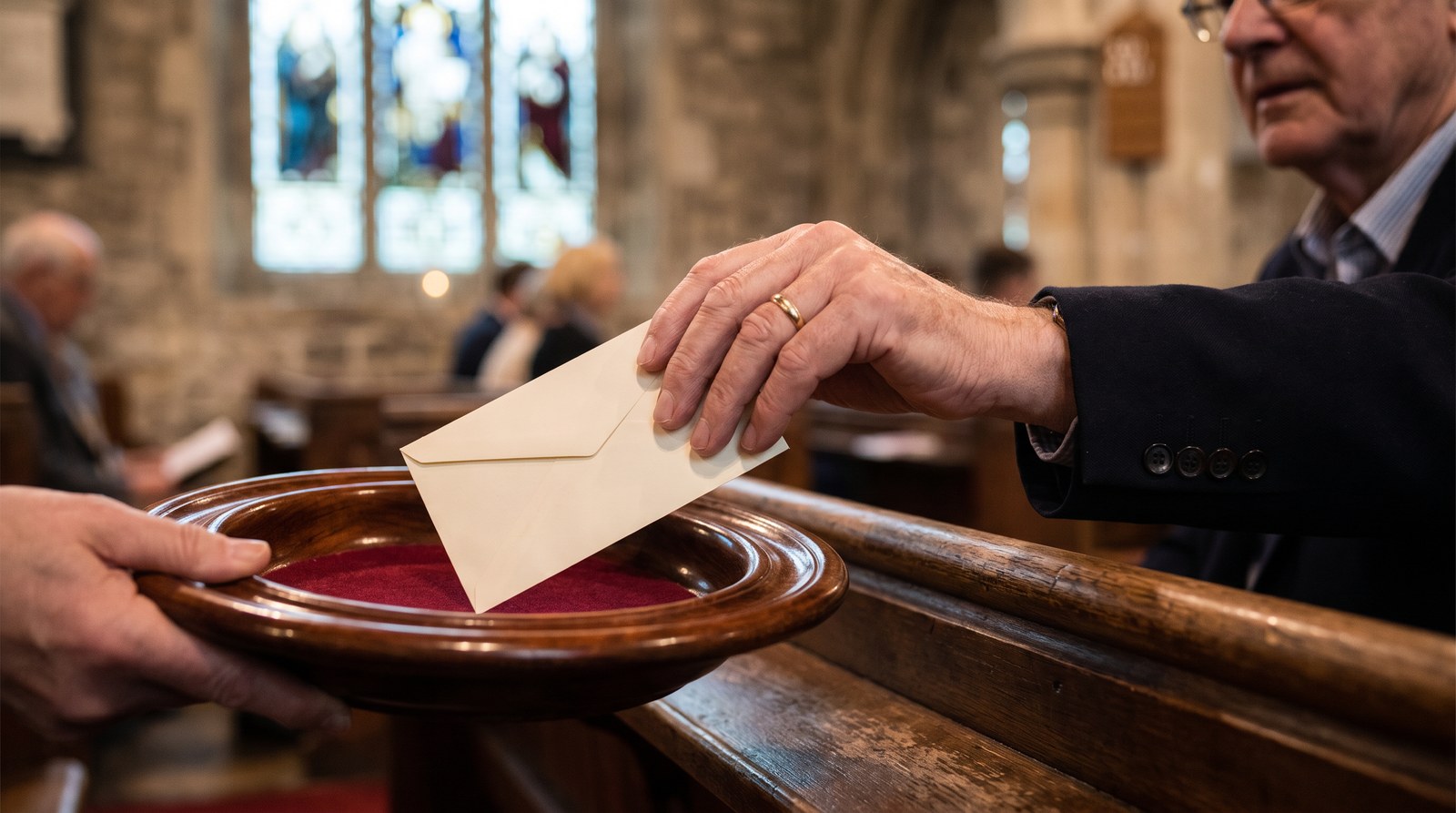
For decades, many Christians give from each paycheck. Then retirement comes, and the paycheck stops. Income now arrives from Social Security, a pension, IRA withdrawals and maybe some part-time work. Questions follow quickly. Do I still tithe? On what? How do I give without running short?
This guide walks through the questions in plain language. It is not a theology ruling. Churches and believers hold different views on the tithe, and you should follow your own convictions.
In the Old Testament, the tithe (a tenth) was part of Israel's law (Leviticus 27:30, Malachi 3:10). In the New Testament, the emphasis is on generous, cheerful, proportional giving: "Each of you should give what you have decided in your heart to give, not reluctantly or under compulsion, for God loves a cheerful giver" (2 Corinthians 9:7). Paul also encourages setting aside a sum "in keeping with your income" (1 Corinthians 16:2).
Many Christians use 10% as a starting point. Others give more or less. The common thread is that giving is intentional and comes from the heart.
Retirement does not end the call to generosity. But it changes three things:
Here are common approaches retirees take:
There is no single right answer. A plan simply helps you choose one on purpose.
Social Security benefits are income, and many Christians include them in their giving. Some reason that they gave on wages from which Social Security taxes were paid. Either way, it helps to know how much of your benefit is taxable, which depends on your other income.
This is the most common worry. A retirement income plan can help by:
If the numbers are tight, generosity can take other forms too: time, skills, hospitality and service. In Mark 12:41-44, Jesus honored the widow's small gift because of the heart behind it.
After age 70½, you can give directly from a traditional IRA to a qualified charity, such as many churches. Key points:
For many retirees who take the standard deduction, a QCD can be a tax-efficient way to give. Confirm the details with your tax professional and make sure your church can receive it. (See Qualified Charitable Distributions: Giving from Your IRA.)
Giving shares that have grown in value, instead of selling them and giving cash, can avoid capital gains tax on the growth, and you may be able to deduct the gift if you itemize. Many churches can accept stock through a brokerage account.
A donor-advised fund lets you make a larger gift in one year and recommend grants to churches and ministries over time. Some retirees "bunch" several years of giving into one year to itemize.
You can name your church or a ministry as a beneficiary of an IRA, life insurance or part of your estate. Retirement accounts can be efficient to leave to charity, because charities generally do not pay income tax on them.
If you feel guilty because you cannot give what you once did, remember that the New Testament emphasis is on a willing heart. Give what you can, plan carefully, and serve in other ways. That is faithful stewardship too.
Will Snodgrass, CFP®, helps Christian retirees build giving into their retirement income plan. Our office is in The Woodlands, Texas, and we work with Texas clients by video. Advisory services are available only where Will is properly registered or exempt from registration. Start with the Free Retirement Paycheck Readiness Scorecard at scorecard.matt25capital.com, or see Retirement Planning in The Woodlands and Christian Financial Advisor in Texas.
Related reading: How Faith-Based Retirement Income Planning Works | RMD Rules for Christian Retirees | The Parable of the Talents and Your Retirement
Many Christians include Social Security in their giving. It is a personal decision based on your convictions and budget.
Christians differ. What matters most is choosing an approach on purpose and giving cheerfully.
After 70½, a qualified charitable distribution may let you give from a traditional IRA to a qualified charity. Check with your tax professional and church.
Give what you can with a willing heart, and look for ways to serve with your time and skills.
Once you reach RMD age, a QCD can count toward your required minimum distribution.
Education only, not tax or legal advice. Consult a tax professional. Securities and advisory services offered through Commonwealth Financial Network®, Member FINRA/SIPC, a Registered Investment Adviser. Fixed insurance products and services are separate from and not offered through Commonwealth.