

January 2026 Recap: A New Year, A New Milestone, and the Power of Staying Steady
- Will Snodgrass
- 2 days ago
- 6 min read

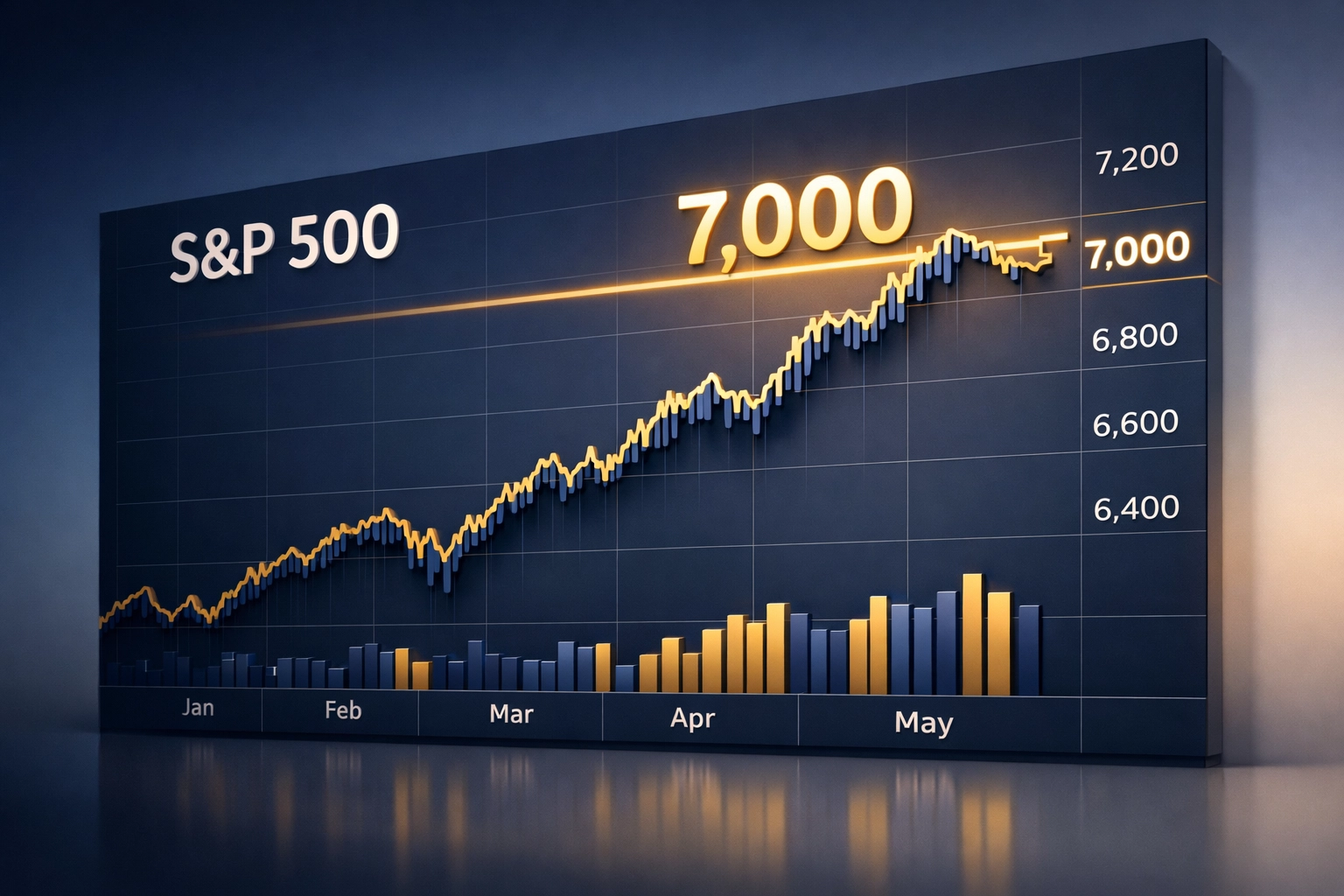
January 2026 kicked off with a headline that caught everyone's attention: the S&P 500 briefly touched the historic 7,000 mark. It was one of those moments that financial media loves: round numbers, record highs, and plenty of reasons for investors to both celebrate and second-guess their strategies.
But as quickly as the champagne bottles were uncorked, reality set in. By month's end, markets had pulled back from those highs, reminding us once again that investing is rarely a straight line upward. If you've been following along with our December 2025 Market & Economic Recap: Insights for the New Year, you know that volatility has been a consistent theme as we transition into this new year.
So what really happened in January, and more importantly, what does it mean for your financial plan? Let's break it down together.
The Markets: A Quick Peak, Then a Breather
The S&P 500's brief flirtation with 7,000 was impressive, no doubt. This milestone represented continued strength in the U.S. equity markets and reflected optimism about corporate earnings and economic resilience. However, the index didn't stay at those levels for long.
By the end of January, profit-taking and renewed uncertainty led to a modest pullback. This isn't necessarily a bad thing. In fact, healthy markets often need these cooling-off periods after rapid advances. Think of it as the market catching its breath before the next leg of the journey.
For context, the S&P 500 has delivered remarkable returns over the past several years, and some consolidation is not only normal but expected. As stewards of the resources entrusted to us, it's crucial to remember that short-term fluctuations: whether up or down: are simply part of the investing experience.
Economic Indicators: Stability Amid Uncertainty
While the markets grabbed headlines, the economic fundamentals told a more nuanced story in January.
The Federal Reserve held interest rates steady in a range of 3.50% to 3.75%. This decision reflected the Fed's ongoing balancing act: keeping inflation in check while supporting economic growth. After the aggressive rate hikes of previous years, this pause signals that policymakers believe they're approaching: or perhaps have reached: a stable monetary policy stance.
Inflation, as measured by the Consumer Price Index (CPI), came in at 2.7% for January. While this remains above the Fed's 2% target, it represents significant progress from the elevated levels we saw in 2022 and 2023. The trend continues to move in the right direction, though the last mile toward the Fed's target may prove to be the most challenging.
Unemployment sat at 4.4%, indicating a labor market that remains relatively healthy but has loosened somewhat from the extremely tight conditions of recent years. This modest uptick in unemployment can actually be viewed positively, as it suggests the economy is cooling without breaking: exactly what the Fed has been trying to engineer.
These indicators paint a picture of an economy that's neither overheating nor falling apart. It's a "Goldilocks" scenario that many economists have been hoping for, though maintaining this balance will require continued careful navigation.
Sector Performance: Winners, Losers, and Lessons
January wasn't kind to all sectors equally. The technology sector, which has been a major driver of market gains in recent years, experienced significant volatility. Companies like Alphabet and Qualcomm saw their share prices swing as investors grappled with questions about valuations, earnings growth, and the sustainability of the AI boom.
This tech turbulence served as a reminder that high-flying sectors can experience sharp corrections, especially after periods of exceptional performance. When everyone is piling into the same trade, it doesn't take much to trigger a reversal.
Meanwhile, defensive sectors: those that tend to hold up better during economic uncertainty: showed greater resilience. Consumer staples, utilities, and healthcare stocks generally outperformed their growth-oriented counterparts. Commodities also demonstrated strength, benefiting from ongoing global demand and supply considerations.
This divergence in sector performance underscores an important principle: diversification matters. A well-constructed portfolio that includes exposure to various sectors and asset classes is better positioned to weather market storms than one that's concentrated in a single area, no matter how attractive that area may seem at any given moment.

What This Means for Faithful Stewards
If you're a client of ours or someone who's exploring what we do at Matt25 Capital, you know that our approach to financial management is rooted in something deeper than just chasing returns. We believe that financial planning should align with your values, support your life goals, and honor the biblical principles of stewardship.
So what does January's market action mean through that lens?
First, it's a reminder that faithfulness requires patience. Proverbs 21:5 tells us, "The plans of the diligent lead surely to abundance, but everyone who is hasty comes only to poverty." When the S&P 500 hit 7,000, some investors likely felt the fear of missing out. When it pulled back, others may have panicked and considered selling. Both reactions are driven by emotion rather than sound planning.
True stewardship means staying committed to a well-thought-out plan that reflects your unique circumstances, timeline, and goals: not reacting to every market headline.
Second, volatility is not your enemy. In fact, for long-term investors, market pullbacks can create opportunities. They allow us to rebalance portfolios, capture tax losses, and potentially add to positions at more attractive valuations. The key is having a plan in place before volatility strikes, so you're prepared to act strategically rather than emotionally.
Third, good financial decisions aren't just about the numbers. As we discussed in our post on Why Good Financial Decisions Aren't Just About the Numbers, your financial plan should account for your entire life: your family, your legacy goals, your charitable intentions, and your desire to live according to your faith.
January's market movements don't change any of those fundamental priorities. Your investment strategy should be designed to support those goals over years and decades, not to maximize returns in any single month.
Staying the Course: Practical Steps for the Road Ahead
As we move deeper into 2026, here are some practical considerations for navigating whatever the markets throw our way:
Review your asset allocation. Is your portfolio still aligned with your risk tolerance and time horizon? January's volatility may have shifted the balance between stocks, bonds, and other assets. A periodic rebalancing ensures you're not taking on more (or less) risk than you're comfortable with.
Keep your emotions in check. It's natural to feel anxious when markets pull back or to feel overconfident when they're reaching new highs. Recognizing these psychological responses is the first step toward making rational decisions.
Maintain an emergency fund. Having 3-6 months of living expenses set aside in liquid accounts provides a buffer that allows you to stay invested for the long term, even when short-term needs arise.
Focus on what you can control. You can't control whether the S&P 500 ends the year at 7,500 or 6,500. But you can control your savings rate, your spending habits, your tax strategies, and your commitment to a diversified, disciplined approach.
Stay connected with your financial advisor. If you're working with a professional: whether that's our team or another trusted advisor: use them as a sounding board. Regular check-ins help ensure your plan stays on track and give you peace of mind during uncertain times.
Looking Forward with Confidence
January 2026 gave us a taste of what this year might bring: moments of excitement, periods of uncertainty, and plenty of opportunities to either react emotionally or respond thoughtfully. The choice, as always, is ours.
As we continue through 2026, we'll be watching the economic data, monitoring sector trends, and staying alert to opportunities and risks. But more importantly, we'll be keeping our focus where it belongs: on helping you achieve your long-term goals with wisdom, integrity, and a commitment to faithful stewardship.
Whether you're a long-time client or someone just beginning to explore how we might work together, we're here to help you navigate these markets with confidence. Not because we have a crystal ball that predicts where the S&P 500 will be next month, but because we have a process, a philosophy, and a faith-centered approach that's designed to serve you well in all market conditions.
Your future is too important to leave to chance: or to emotional reactions to market noise. Let's build something that lasts.
Disclosure: The opinions voiced in this material are for general information only and are not intended to provide specific advice or recommendations for any individual. All performance referenced is historical and is no guarantee of future results. All indices are unmanaged and may not be invested into directly.
The economic forecasts set forth in this material may not develop as predicted and there can be no guarantee that strategies promoted will be successful.
Stock investing includes risks, including fluctuating prices and loss of principal. Bonds are subject to market and interest rate risk if sold prior to maturity. Bond values will decline as interest rates rise and bonds are subject to availability and change in price.
There is no guarantee that a diversified portfolio will enhance overall returns or outperform a non-diversified portfolio. Diversification does not protect against market risk.
Securities and advisory services offered through Commonwealth Financial Network®, Member FINRA/SIPC, a Registered Investment Adviser.
Comments